
Rugiet: Men's health
RugietMedical
4.836.00 Reviews
- Version
- 1.18.0
- Installs
- 10.00K
- Age Rating
- Mature 17+
Screenshots

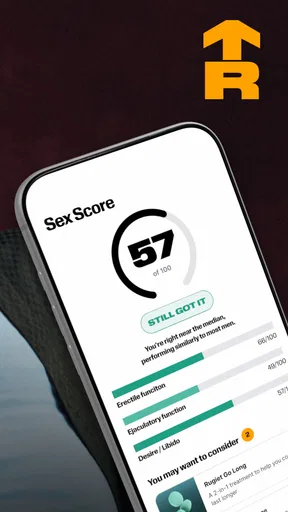
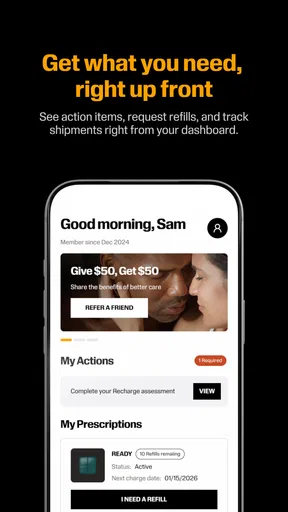
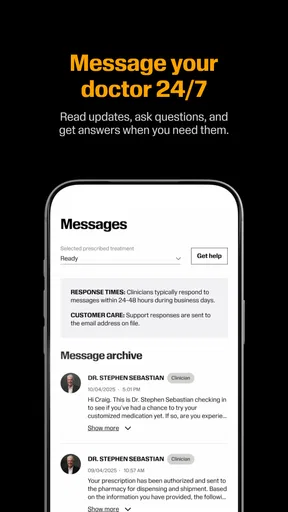
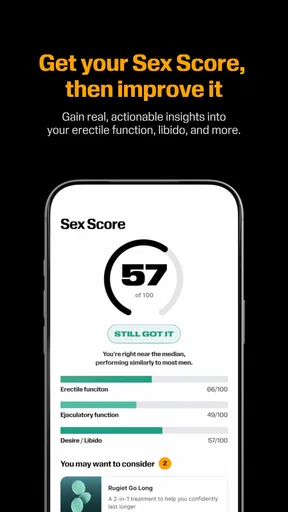
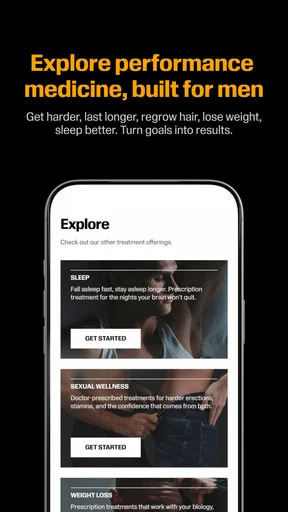
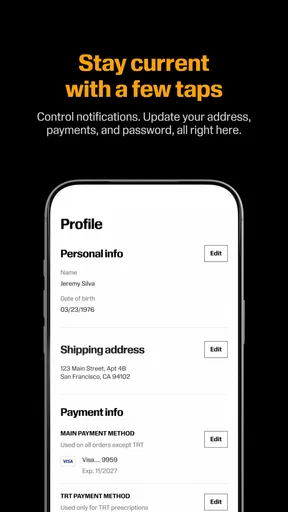
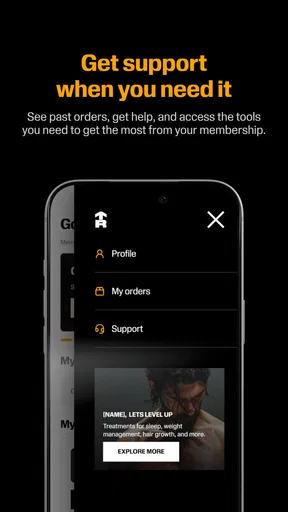
Our Review of Rugiet: Men's health
 Analysis by Appyee
Rugiet: Men's health is a medical app from Rugiet that brings prescription management, doctor messaging, and treatment exploration into one place. I approached it less like a novelty health download and more like a tool I might keep on my phone for an ongoing, private healthcare routine. That distinction matters: an app can feel useful during its first few days and still become unnecessary once the initial curiosity fades.
My first impression was that its value depends on whether you already have a reason to manage men’s health treatment digitally. If you are comfortable handling prescriptions and questions through scattered services, the app may not immediately feel essential. If you want those steps gathered into one focused space, the design has a clearer purpose. It is free to install, carries a Mature 17+ rating, and is available for Android devices running version 7.0 or later, which makes it accessible across a wide range of phones.
The public response is encouraging, with a 4.8 average from around 876 ratings and more than 10 thousand installs. I would not treat that as proof that every user will have the same experience, but it does suggest that the app is solving a real problem for a meaningful group of people. The current version is 1.18.0, and Rugiet is the developer behind the experience.
What makes the first week appealing
The strongest early appeal is concentration. Instead of treating prescription details, treatment questions, and communication with a doctor as unrelated tasks, Rugiet presents them as parts of the same healthcare journey. That arrangement can reduce the mental switching that often makes personal medical administration feel more awkward than it needs to be.
I especially like the idea of opening one app when I need to review what I am managing, consider available treatment paths, or contact a clinician. The benefit is not excitement; it is reduced friction. A focused medical app does not need to entertain me. It needs to help me remember where to go and what to do next.
A realistic everyday scenario would be a user who notices a question after reviewing a prescription routine in the evening. With a conventional approach, that question might sit in a notes app until the next appointment, or the person might need to find a separate patient portal and work out which message category applies. Rugiet’s purpose is to make that next step feel more direct. I would still write the question clearly, include relevant context, and avoid expecting an app to replace urgent medical care, but having a dedicated communication route can make follow-through more likely.
The treatment-exploration side is also useful during the first week because it gives users a place to learn before making a decision. That is different from simply searching the wider internet, where information can be contradictory, overly promotional, or detached from a person’s medical situation. I would use this part to prepare better questions for a doctor rather than treating it as a substitute for professional advice.
One non-obvious advantage is that the app can act as a boundary around a sensitive subject. Men’s health concerns are often delayed because people do not want to discuss them casually or navigate a general healthcare system. A purpose-built space may make the first administrative step feel less exposed. That does not guarantee comfort, but it can lower the emotional barrier to asking for help.
There is also a trade-off in that focus. Someone looking for a broad health record, appointment calendar, laboratory history, or general wellness dashboard may find the experience too narrow. Rugiet is more compelling when the user’s main need is connected to its specific treatment and prescription-management purpose. It is not the app I would choose as a universal replacement for a hospital portal or a complete personal health record.
How I would use it during the first few days
I would begin by checking how prescriptions and treatment information are organized before trying to explore every available area. That gives me a practical sense of whether the app fits my routine. I would then prepare a short list of questions for a doctor instead of sending several incomplete messages over time. This small habit is important because digital convenience can otherwise create more back-and-forth rather than less.
I would also decide what I expect the app to do for me. If the goal is to manage an existing treatment relationship, I would judge it by clarity and continuity. If the goal is simply to browse health information, I would be more cautious about keeping it installed, because curiosity alone rarely creates lasting value in a medical app.
The Mature 17+ rating is appropriate for the subject matter. It signals that this is intended for adults dealing with private health concerns, not for casual family use. I would also treat privacy as part of my personal setup: use a secure device lock, avoid discussing sensitive details in notifications that others might see, and review any message before sending it. Those are sensible habits for any medical communication tool, but they matter especially here.
Whether it earns a place month after month
The long-term question is harder than the first-week question. Prescription management can be valuable over time, but only if the app remains connected to an active treatment routine. If I am checking information, communicating with a doctor, or considering a change in treatment, the app has a recurring role. If nothing is changing and I rarely need support, opening it may become occasional rather than habitual.
That is not necessarily a weakness. A medical app should not manufacture engagement just to keep me tapping. In this category, a quiet month can mean that treatment is stable. I would rather have a tool that becomes useful when needed than one that pushes unnecessary reminders or turns a sensitive issue into a daily performance.
The recurring value comes from reducing the number of places I need to remember. Prescription details are easier to manage when they are associated with the same environment where questions and treatment decisions begin. Over several months, that consistency may be more important than a polished first impression. The app earns its space when it helps me complete a real healthcare task faster or with less hesitation.
A second non-obvious insight is that the best use pattern may be event-based rather than daily. I would open it when starting a treatment conversation, preparing a message, reviewing prescription-related information, or deciding what to ask next. Expecting a men’s health app to become a daily social or fitness habit sets the wrong standard. Its maintenance value is measured by how reliably it supports important moments.
Compared with a general pharmacy app, Rugiet appears more focused on the relationship between treatment exploration, prescriptions, and doctor communication. A pharmacy-centered alternative may be better for broad medication refills, delivery tracking, or managing several unrelated prescriptions. Compared with a general patient portal, Rugiet may feel more direct for its intended subject, while the hospital portal may remain stronger for records, appointments, test results, and communication across multiple specialties.
Compared with searching online, a dedicated medical app has the advantage of giving the user a clearer path from information to a clinician conversation. The limitation is that no app should be treated as a diagnosis engine. I would use Rugiet to organize the next question, not to make a medical decision in isolation.
The maintenance burden is low, but not zero
Keeping a medical app useful requires a little discipline. I would make sure prescription information remains current, read messages carefully, and keep track of questions before they become urgent. The app can centralize these activities, but it cannot supply the attention needed to use them responsibly.
There is a practical advantage to preparing messages in batches. If several concerns arise over a few days, I would group them into a concise note with clear points rather than sending one message for each thought. That makes the conversation easier to follow and helps me notice whether I have included the information a doctor is likely to need.
I would also avoid relying on memory alone after a treatment discussion. If the app presents information I need to revisit, I would review it before making assumptions about timing, suitability, or changes. The convenience of digital access can create false confidence, especially when a user skims instead of reading.
The burden may feel higher for people who dislike health administration in general. A centralized app does not eliminate the need to answer questions, communicate accurately, or follow medical guidance. It simply gives those tasks a more focused home. Users expecting an automatic solution may become frustrated when the app still requires participation.
Another trade-off is dependence on the app’s relevance to the user’s current care. If my needs move outside the treatment area Rugiet supports, I may still need a primary-care provider, specialist, pharmacy service, or broader patient portal. I would not delete those alternatives just because one focused app is convenient. The sensible approach is to let each tool handle the part of healthcare it is best suited to manage.
Where fatigue can set in
The main source of fatigue is repetition without a clear reason to return. If I have no new question, prescription task, or treatment decision, opening the app may feel unnecessary. That is normal for a medical tool, but it means the app’s long-term success depends on usefulness at the right moments rather than constant engagement.
Another possible frustration is that privacy and sensitivity can make users slower to explore. I would be careful about using the app around other people, leaving messages visible on screen, or storing personal details casually. Those precautions are worthwhile, yet they add a small amount of friction compared with a generic wellness app.
Messaging can also create expectations. A user may assume that sending a note means receiving an immediate answer, but medical communication is not the same as live chat. I would use the app for appropriate questions and keep urgent symptoms or emergencies outside this workflow, contacting the proper emergency or clinical service instead.
Treatment exploration may become tiring if I approach it as a catalogue rather than a conversation starter. The useful question is not “Which option sounds best from a quick description?” but “What should I ask a qualified professional about my situation?” That mindset prevents the app from becoming another source of endless comparison.
For someone already satisfied with a clinician’s existing portal, the extra app may feel like duplication. I would keep Rugiet only if its focused workflow is noticeably easier or more relevant. Installing another medical app just because it is free is not a good reason to add another place where information might need attention.
Who will benefit most, and who should skip it
I see the best fit as an adult who wants a focused way to explore men’s health treatments, manage related prescriptions, and communicate with a doctor without navigating a broad healthcare system every time. It may also suit someone who tends to postpone sensitive questions and would benefit from having a clearly defined digital starting point.
I would be less likely to recommend it to a person seeking a complete medical record, a general medication manager, or a fitness and lifestyle tracker. It is also not the right choice for anyone who wants an app to make treatment decisions without clinician involvement. A broader patient portal or pharmacy app may be more practical when care involves several conditions, multiple providers, or extensive records.
People who rarely use smartphones for healthcare may need a little patience at the beginning. The app can simplify access, but it does not remove the need to understand what is being discussed. I would recommend taking time to read treatment information and prepare questions rather than rushing through setup simply because the app is convenient.
My long-term verdict on Rugiet
After the novelty fades, Rugiet’s strongest argument is not that it gives me another health dashboard. It is that it can make a specific, private healthcare workflow easier to return to when I actually need it. That is a modest promise, but it is the right kind of promise for a medical app.
I would keep it installed if I were actively managing a relevant prescription or using its doctor-communication and treatment-exploration functions. In that situation, the focused structure could save mental effort and make important questions less likely to be ignored. I would not keep it merely as a source of occasional browsing, especially if a trusted doctor portal already handles the same tasks more effectively.
The free price lowers the barrier to trying it, while the adult rating and medical focus make its intended audience clear. Rugiet’s 4.8 average and growing install base give it a reassuring starting point, but my recommendation still depends on fit rather than popularity. The app is useful when it supports an ongoing care relationship; it is less useful when there is no active reason to use that relationship.
My final judgment is positive but deliberately practical: Rugiet earns lasting space when it becomes part of a real prescription-and-doctor routine, not when it is treated as a daily wellness habit. I would recommend giving it a focused trial, organizing questions before messaging, and comparing its role with any existing pharmacy or patient-portal tools. If it removes a recurring source of confusion, keep it. If it simply duplicates services you already use, the more established alternative may be the better long-term home.
For the right adult user, Rugiet is a sensible specialized medical companion from Rugiet rather than a generic health app. Its lasting value comes from being available at the moment a sensitive treatment question, prescription task, or doctor conversation needs attention. That is enough to make it worthwhile, provided the user understands both its focused purpose and the limits of digital healthcare support.
Verdict
Strengths of Rugiet: Men's health
- Discreet access to personalized men’s health support
- May combine treatment options in one convenient prescription
- Telehealth model can reduce the need for in-person visits
- Clear guidance can help users follow treatment instructions
- Useful for men seeking a private way to discuss sexual health
Limitations of Rugiet: Men's health
- Eligibility depends on a medical review and may not suit everyone
- Prescription and delivery availability can vary by location
- Treatment may cause side effects or interact with other medicines
- Consultation fees and medication costs may not be covered by insurance
- Requires accurate health information before a clinician can prescribe
Similar Picks in This Category
View All
WebMD: Symptom Checker
WebMD, LLC4.1

Microphone Amplifier
DOSA Apps4.2

Anatomy Learning - 3D Anatomy
3D Medical OU4.5

Period Tracker and Calendar
SimpleInnovation4.9

GoodRx: Prescription Coupons
GoodRx4.8

CVS Health
CVS Pharmacy4.5
Frequently Asked Questions
What is Rugiet: Men’s Health, and what is it designed to do?
Rugiet: Men’s Health is a digital men’s wellness and telehealth service focused primarily on sexual health concerns, including erectile dysfunction. The app is intended to connect eligible users with licensed medical professionals, provide educational information, and support treatment management. Availability, medical evaluation, and prescribed options may vary depending on your location, health history, and the provider’s assessment.
Do I need a prescription to use Rugiet or receive treatment through the app?
The app itself may be available to download without a prescription, but prescription medication cannot be provided simply by installing it. Users generally need to complete a medical questionnaire or consultation so a licensed clinician can review their symptoms, current medicines, allergies, and medical history. If treatment is considered appropriate, the clinician may issue a prescription where legally permitted.
Is Rugiet: Men’s Health safe for everyone to use?
No health app or erectile-dysfunction treatment is suitable for every person. People with certain heart conditions, very low blood pressure, serious liver or kidney problems, or those taking nitrate medicines may face significant risks from some treatments. Before using any prescribed product, provide complete and accurate medical information and follow the clinician’s instructions. Seek urgent care for severe chest pain, fainting, or a prolonged erection.
What information should I prepare before completing the Rugiet consultation?
You should be ready to provide honest details about your symptoms, how long they have been present, previous treatments, medical conditions, allergies, and all prescription or nonprescription medicines and supplements you take. Information about cardiovascular health, blood pressure, mental health, and lifestyle can also be relevant. Accurate answers help the clinician determine whether treatment is appropriate and reduce the risk of dangerous interactions.
Is Rugiet: Men’s Health available on Android and iPhone, and what should I check before downloading?
Availability can depend on your country, state, device, and the current distribution policy of the service. Before downloading, check the official Google Play Store or Apple App Store listing, supported operating-system versions, privacy information, subscription or consultation costs, shipping details, and cancellation terms. Avoid unofficial download sites, and remember that app access does not guarantee approval for medication or treatment.
